
Jitendra P. Damani
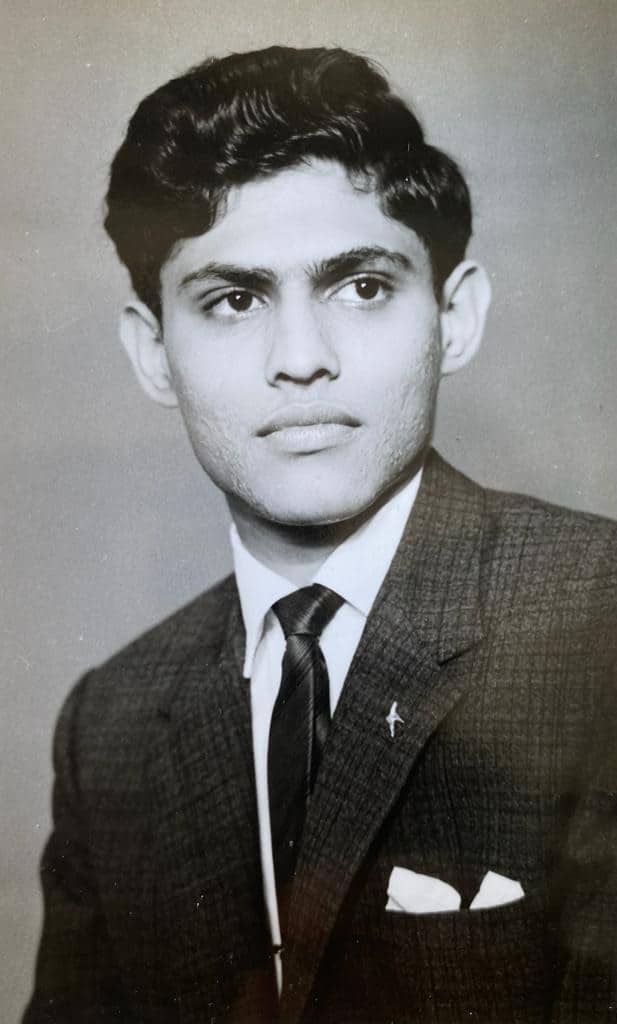
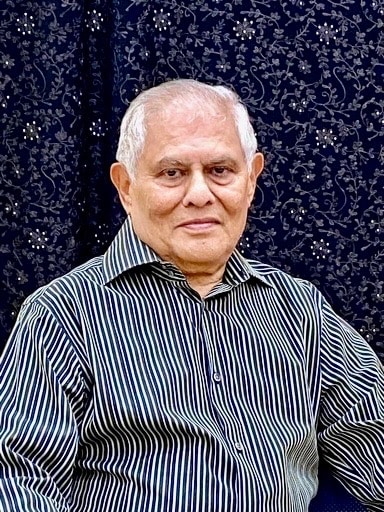
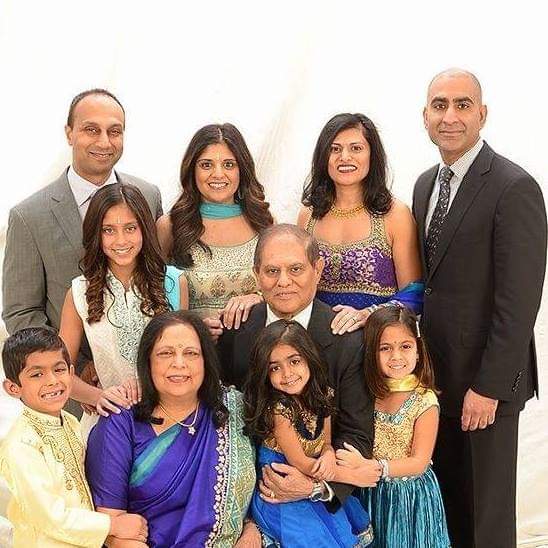
Jitendra Prabhulal Damani was born on January 17, 1942, in Kampala, Uganda, to Prabulal and Vanita Damani. He was the eldest of three sisters and three brothers, five of whom survive him across four continents. Also surviving him are his wife, Bharti; his daughters, Minal and Pallavi; his sons-in-law, Monish and Nitin; and his four grandchildren, Rani, Sachin, Riya, and Karina. His 81 years on Earth is a testament to his resilience, courage, and adaptation. Jitendra’s determination mirrors that of many immigrants who come to America for a second chance and repay their gratitude with positive contributions to our society.
In his early 20s, Jitendra (nicknamed “Jitu”) worked as a pharmaceutical sales representative, a job requiring him to travel around East Africa to distribute medicines to doctors. Though Indian by birth, he deeply appreciated unspoiled, beautiful, wild Africa and promptly renounced his British citizenship when Uganda gained independence from Great Britain in 1962. Jitu proudly embraced Ugandan citizenship, a decision that would haunt him exactly a decade later.
In 1970 at age 28, Jitu traveled with his youngest brother, Kaushik, to India to find a bride. With the help of his uncle, he met Bharti, a 24-year-old woman with long, silky hair who grew up in Burma but had spent the prior two years in the U.S. After a supervised “one-hour date” in which the two shared global perspectives, on May 12, 1970, Bharti Kilachand Doshi married Jitendra P. Damani. Jitu proudly brought his bride home to meet his family in beloved Kampala, the city of seven hills.
Jitendra P. Damani
Jitendra Prabhulal Damani was born on January 17, 1942, in Kampala, Uganda, to Prabulal and Vanita Damani. He was the eldest of three sisters and three brothers, five of whom survive him across four continents. Also surviving him are his wife, Bharti; his daughters, Minal and Pallavi; his sons-in-law, Monish and Nitin; and his four grandchildren, Rani, Sachin, Riya, and Karina. His 81 years on Earth is a testament to his resilience, courage, and adaptation. Jitendra’s determination mirrors that of many immigrants who come to America for a second chance and repay their gratitude with positive contributions to our society.
In his early 20s, Jitendra (nicknamed “Jitu”) worked as a pharmaceutical sales representative, a job requiring him to travel around East Africa to distribute medicines to doctors. Though Indian by birth, he deeply appreciated unspoiled, beautiful, wild Africa and promptly renounced his British citizenship when Uganda gained independence from Great Britain in 1962. Jitu proudly embraced Ugandan citizenship, a decision that would haunt him exactly a decade later.
In 1970 at age 28, Jitu traveled with his youngest brother, Kaushik, to India to find a bride. With the help of his uncle, he met Bharti, a 24-year-old woman with long, silky hair who grew up in Burma but had spent the prior two years in the U.S. After a supervised “one-hour date” in which the two shared global perspectives, on May 12, 1970, Bharti Kilachand Doshi married Jitendra P. Damani. Jitu proudly brought his bride home to meet his family in beloved Kampala, the city of seven hills.
Jitu and Bharti welcomed their first daughter, Minal, in March 1971 in Kampala. When Bharti became pregnant again just months later, she decided to travel to India to give birth to their second child, allowing her to lean on her mother for support. When Bharti departed Kampala with Minal on June 30, 1972, she did not know that day would be her last as a resident of Uganda. Pallavi arrived a few weeks later at the end of July 1972 in Pune, India. Just 10 days after Pallavi’s birth, Uganda’s military leader Idi Amin proclaimed the expulsion of 80,000 Asians from Uganda to “reclaim” the country’s economy.
Jitu was the first in his family to stand in the long, winding line to the immigration office with his passport and birth certificate in hand. The arbitrary deliberation process involved a short exchange between Amin’s soldier who glanced at Jitu’s documents and declared, “You are NOT a citizen.” The soldier ripped up Jitu’s citizenship papers despite clear documentation that he was a Ugandan patriot. Jitu protested and then heard a gun cock at the back of his head. Completely disheartened and shocked, he capitulated and left the immigration office to share the news with his father at their family store, Damanis, in downtown Kampala, where Jitu had worked side-by-side with his dad to manage their textile business for many years. The shop appeared in an October 1973 issue of Time magazine as one of the last South Asian businesses to close amid Idi Amin’s ruthless military coup.
Bharti’s brother, Pratap, was working as a nuclear engineer for Westinghouse in Pittsburgh, Pennsylvania. Pratap and his new wife, Madhu, agreed to sponsor the Damani family of four. Jitu received asylum from the U.S. when President Nixon relented to worldwide pressure and allowed just 1,000 refugees to enter the country. The International Rescue Committee (IRC) paid for Jitu’s passage.
With excitement and anticipation, Jitu arrived at John F. Kennedy International Airport in New York on Pan Am Flight #119 via Naples on November 2, 1972, just six days before Amin’s non-negotiable deadline. From there, he boarded a plane with a few dollars in his pocket and a single suitcase of keepsakes and valuables to head to his new home 7,400 miles from his birthplace. He met his brother-in-law Pratap for the very first time at the Pittsburgh International Airport. The weather was 42 degrees, far lower than the 80 degree temperatures he had left behind in his tropical Kampala.
Jitu and Bharti welcomed their first daughter, Minal, in March 1971 in Kampala. When Bharti became pregnant again just months later, she decided to travel to India to give birth to their second child, allowing her to lean on her mother for support. When Bharti departed Kampala with Minal on June 30, 1972, she did not know that day would be her last as a resident of Uganda. Pallavi arrived a few weeks later at the end of July 1972 in Pune, India. Just 10 days after Pallavi’s birth, Uganda’s military leader Idi Amin proclaimed the expulsion of 80,000 Asians from Uganda to “reclaim” the country’s economy.
Jitu was the first in his family to stand in the long, winding line to the immigration office with his passport and birth certificate in hand. The arbitrary deliberation process involved a short exchange between Amin’s soldier who glanced at Jitu’s documents and declared, “You are NOT a citizen.” The soldier ripped up Jitu’s citizenship papers despite clear documentation that he was a Ugandan patriot. Jitu protested and then heard a gun cock at the back of his head. Completely disheartened and shocked, he capitulated and left the immigration office to share the news with his father at their family store, Damanis, in downtown Kampala, where Jitu had worked side-by-side with his dad to manage their textile business for many years. The shop appeared in an October 1973 issue of Time magazine as one of the last South Asian businesses to close amid Idi Amin’s ruthless military coup.
Bharti’s brother, Pratap, was working as a nuclear engineer for Westinghouse in Pittsburgh, Pennsylvania. Pratap and his new wife, Madhu, agreed to sponsor the Damani family of four. Jitu received asylum from the U.S. when President Nixon relented to worldwide pressure and allowed just 1,000 refugees to enter the country. The International Rescue Committee (IRC) paid for Jitu’s passage.
With excitement and anticipation, Jitu arrived at John F. Kennedy International Airport in New York on Pan Am Flight #119 via Naples on November 2, 1972, just six days before Amin’s non-negotiable deadline. From there, he boarded a plane with a few dollars in his pocket and a single suitcase of keepsakes and valuables to head to his new home 7,400 miles from his birthplace. He met his brother-in-law Pratap for the very first time at the Pittsburgh International Airport. The weather was 42 degrees, far lower than the 80 degree temperatures he had left behind in his tropical Kampala.
Six months after Jitu arrived in the U.S., Smith, Kline & French (now GlaxoSmithKline) hired him as a pharmaceutical sales representative because of his early work distributing medicines in East Africa. While he adjusted to his new home and worked to secure his first apartment in Monroeville, Pennsylvania, Jitu wrote frequent pleas to Charles Sternberg, the executive director of IRC, to bring his wife and daughters from India. Jitu had not yet met his new baby girl. IRC worked tirelessly with global refugee agencies and the U.S. State Department to unite Jitu, Bharti, Minal, and Pallavi on March 14, 1973 as a family of four at the Pittsburgh International Airport. Jitu held 9-month-old Pallavi for the very first time.
Pittsburgh was home to the Damani family for 30 years. Though he did not have a college degree, Jitu could speak, read, and write in English. Despite losing his home and assets, separating from his parents and siblings, and departing unexpectedly from his homeland, Jitu established himself in America without warning or preparation. With diligence and industry, Jitu and Bharti designed, built, and owned five homes between Pennsylvania and Florida during his 50 years in America. Above all, he and Bharti invested in education for their daughters to ensure their futures and pave a smoother road so their lives would be easier.
On June 15, 2023 the Damani family lost Jitu after a courageous battle with cancer and has reflected on his journey considerably since then. Jitu’s life reflects how persistence, perseverance, and a work ethic can transform the despair of an immigrant’s plight to one of success for the generations of family that survive him in America. He projected optimism in everything he did. When one door closed, he pivoted to find another that opened. When he lost his home, he built a new one. When he lacked a skill, he fearlessly learned what he needed to succeed. Many hurdles confronted him over the years, but he always found a way to overcome them with a smile that lifted his family. Jitu (aka Honeybun, Daddy, Nana) will be forever missed, but his legacy lives on in all of us.
Six months after Jitu arrived in the U.S., Smith, Kline & French (now GlaxoSmithKline) hired him as a pharmaceutical sales representative because of his early work distributing medicines in East Africa. While he adjusted to his new home and worked to secure his first apartment in Monroeville, Pennsylvania, Jitu wrote frequent pleas to Charles Sternberg, the executive director of IRC, to bring his wife and daughters from India. Jitu had not yet met his new baby girl. IRC worked tirelessly with global refugee agencies and the U.S. State Department to unite Jitu, Bharti, Minal, and Pallavi on March 14, 1973 as a family of four at the Pittsburgh International Airport. Jitu held 9-month-old Pallavi for the very first time.
Pittsburgh was home to the Damani family for 30 years. Though he did not have a college degree, Jitu could speak, read, and write in English. Despite losing his home and assets, separating from his parents and siblings, and departing unexpectedly from his homeland, Jitu established himself in America without warning or preparation. With diligence and industry, Jitu and Bharti designed, built, and owned five homes between Pennsylvania and Florida during his 50 years in America. Above all, he and Bharti invested in education for their daughters to ensure their futures and pave a smoother road so their lives would be easier.
On June 15, 2023 the Damani family lost Jitu after a courageous battle with cancer and has reflected on his journey considerably since then. Jitu’s life reflects how persistence, perseverance, and a work ethic can transform the despair of an immigrant’s plight to one of success for the generations of family that survive him in America. He projected optimism in everything he did. When one door closed, he pivoted to find another that opened. When he lost his home, he built a new one. When he lacked a skill, he fearlessly learned what he needed to succeed. Many hurdles confronted him over the years, but he always found a way to overcome them with a smile that lifted his family. Jitu (aka Honeybun, Daddy, Nana) will be forever missed, but his legacy lives on in all of us.